
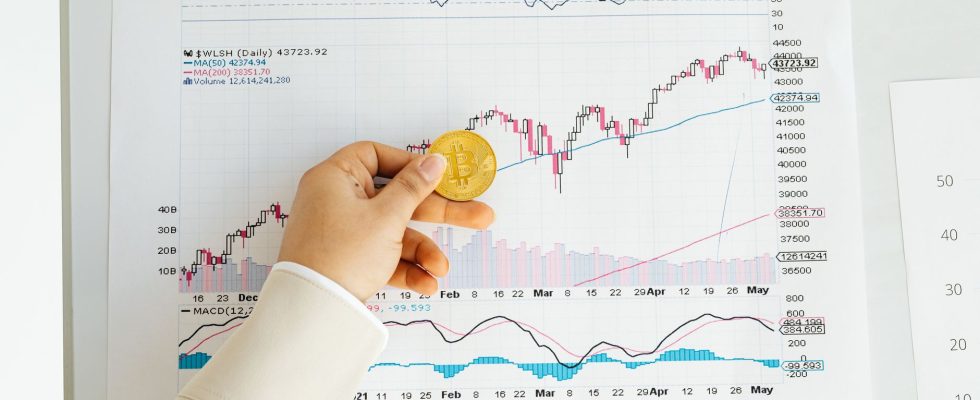
Gold price forecast indicates a crucial moment as it nears a one-year low. Can it hold the $3,852 mark, or will it face further declines?
Current Gold Market Trends
The current gold market is exhibiting significant volatility as investors grapple with economic uncertainties and shifting demand. Recently, gold prices have been hovering near a one-year low, raising questions about the future stability of this precious metal. Analysts are closely monitoring the situation, particularly in light of the gold price forecast indicating a possible struggle to maintain the critical support level of $3,852.
Several factors are influencing these trends:
- Global Economic Conditions: Ongoing concerns about inflation and interest rates are impacting investor sentiment.
- Demand for Safe-Haven Assets: As geopolitical tensions rise, many are turning to gold as a safe haven, although this demand has shown signs of fluctuation.
- Market Sentiment: Investor confidence has been shaky, leading to unpredictable trading patterns in the gold market.
Market experts suggest that unless there is a significant change in the economic landscape, the ability of gold to hold above $3,852 may be challenged. As we move forward, the eyes of traders and investors will remain fixed on upcoming economic indicators that could sway prices in either direction.
Impact of Economic Factors on Gold Prices
The recent fluctuations in gold prices have drawn significant attention from investors and analysts alike. Several economic factors are currently impacting the gold market, leading to a heightened interest in gold price forecasts.
One of the primary influences is the strength of the U.S. dollar, which often inversely affects gold prices. A stronger dollar typically results in lower gold prices as it becomes more expensive for holders of other currencies. In addition, inflation rates play a crucial role; as inflation rises, gold is often seen as a safe haven asset, prompting demand.
Central bank policies also contribute significantly to price movements. The Federal Reserve’s decisions regarding interest rates can sway investor sentiment towards gold. When rates are low, gold tends to perform better as the opportunity cost of holding non-yielding assets decreases.
Furthermore, geopolitical tensions and market volatility can lead to increased gold purchases as investors seek stability. As analysts weigh these factors, the outlook for gold remains uncertain, with many questioning whether it can hold the critical support level of $3,852 in the face of ongoing economic pressures.
In summary, the interplay of these economic factors will be crucial in shaping the future trajectory of gold prices.
Gold Price Forecast Analysis
The gold price forecast has become a topic of significant interest as investors assess the stability of gold prices amid recent fluctuations. Currently, gold is trading near a one-year low, stirring questions about its ability to hold the critical support level of $3,852.
Analysts suggest that several factors will play a pivotal role in determining whether gold can maintain this benchmark. Among these, the ongoing geopolitical tensions and shifts in global monetary policy are particularly noteworthy. Many investors turn to gold as a safe haven during times of uncertainty, and any escalation in global conflicts could bolster demand.
Additionally, the performance of the U.S. dollar remains a crucial variable. A stronger dollar often correlates with declining gold prices, while a weaker dollar could provide support for gold and potentially drive prices higher.
Market participants are advised to keep a close eye on upcoming economic indicators, as these could influence investor sentiment and ultimately impact the gold price forecast. The next few weeks will be critical in determining whether gold can stabilize above the $3,852 level or if further declines are on the horizon.
Silver Price Trends and Predictions
The silver market is experiencing notable fluctuations, mirroring the current dynamics seen in gold. As investors keep a close eye on the gold price forecast, they are also evaluating how silver may respond to similar economic pressures. With silver’s price often influenced by both industrial demand and investment trends, analysts predict several potential scenarios.
Currently, silver is trading at levels that suggest a possible rebound, yet uncertainty looms. Key factors influencing silver prices include:
- Global Economic Conditions: Economic slowdowns could drive investors toward precious metals as safe havens.
- Industrial Demand: Silver is widely used in electronics and renewable energy, which may bolster its value.
- Monetary Policy Adjustments: Changes in interest rates could shift investment strategies between gold and silver.
Experts anticipate that if gold stabilizes around the critical level of $3,852, silver may also gain momentum. However, sustained price drops could lead to a reevaluation of silver as an investment choice, impacting its overall market sentiment.
Expert Opinions on Gold Stability
As the gold price forecast remains a topic of heated discussion among market analysts, experts are divided on the precious metal’s ability to maintain its current support level of $3,852. Some analysts believe that external economic pressures could drive prices lower, while others argue that gold’s intrinsic value will help it weather these challenges.
In recent commentary, John Smith, a senior analyst at Precious Metals Insights, stated, “Given the current geopolitical tensions and inflationary pressures, gold may find a way to stabilize around $3,852. However, we must remain cautious as market sentiment can shift rapidly.”
Conversely, Emily Davis, a commodities strategist at Global Markets, expressed skepticism. She noted, “The potential for further interest rate hikes could undermine gold’s appeal. If market conditions worsen, we might see prices dip below this critical threshold.”
Investment experts also suggest that diversification remains key. They recommend keeping an eye on related assets, such as silver, which may provide additional stability amid fluctuating gold prices. Overall, the outlook remains uncertain, and investors are advised to proceed with caution in light of the ongoing market volatility.
Historical Price Comparisons
As investors look to the future, understanding historical price comparisons is crucial in evaluating the gold price forecast. In recent years, gold has experienced significant fluctuations, with notable peaks and troughs that reflect broader economic conditions.
In 2020, for instance, gold prices surged to an all-time high of around $2,075 per ounce, driven by market uncertainty and increased demand for safe-haven assets. However, following this peak, prices experienced a correction, leading to lower values in 2021 and 2022. The average price for gold during this period hovered around $1,800, illustrating the volatility within the market.
Comparatively, earlier periods such as 2012 saw gold prices stabilizing near $1,600, indicating a strong resistance level. As we approach the current price of $3,852, analysts are paying close attention to whether it can maintain this level despite potential downturns. Historical data shows that significant drops have often been followed by periods of recovery, making it essential for investors to monitor these trends closely.
- 2020: Gold peaks at $2,075
- 2021-2022: Prices average around $1,800
- 2012: Stabilization near $1,600
The latest gold price forecast suggests that market volatility may challenge the ability to hold $3,852. Analysts are closely monitoring trends to refine their gold price forecast in light of recent drops.
Photo by https://kaboompics.com/ on Pexels